Overview
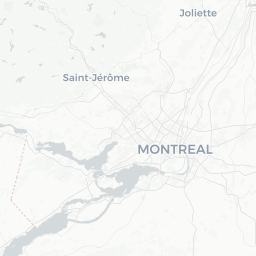
Ahuntsic-Cartierville is a borough (arrondissement) in the northern part of the Island of Montreal, Quebec. With a population of roughly 135,000, it is one of the larger and more diverse boroughs of the city, yet it receives far fewer tourists than downtown Montreal or the Plateau-Mont-Royal. That relative anonymity is precisely its appeal for travellers who want to see how Montrealers actually live.
The borough stretches along the southern bank of the Rivière des Prairies, the waterway that separates Montreal Island from Laval. This riverfront geography defines much of the area's leisure culture: long linear parks, cycling trails, and calm water views are woven into everyday life. The neighbourhood of Sault-au-Récollet, in the eastern portion of the borough, contains some of the oldest continuously inhabited land on Montreal Island, with stone buildings and a historic church dating to the French colonial era.
Ahuntsic-Cartierville is also a gateway to understanding Montreal's multicultural fabric. The Cartierville section in the west and areas around Boulevard Henri-Bourassa host significant North African, South Asian, and Latin American communities, reflected in the food, shops, and street life. It is a practical, lived-in place rather than a curated attraction, and visitors who approach it that way will find it rewarding.
Before You Go
Visas and Entry
Ahuntsic-Cartierville is part of Canada. Entry requirements depend on your nationality and travel document. For accurate, up-to-date visa and eTA (Electronic Travel Authorization) information, visit TravelerPulse's Visas section and the official Immigration, Refugees and Citizenship Canada (IRCC) website.
What to Pack
- Summer (June–August): Light clothing, rain jacket, sunscreen, and mosquito repellent for riverfront evenings.
- Winter (December–March): Serious cold-weather layers are essential; temperatures regularly fall below −15 °C. Waterproof boots with good grip are important for icy sidewalks.
- Year-round: A reusable water bag or bottle — tap water in Montreal is safe to drink.
Health
No vaccinations are specifically required for travel to Canada. Travel health insurance is strongly recommended for visitors, as Canadian public healthcare is not available to tourists. Verify current health entry requirements before departure.
Getting There
By Air
Montréal-Trudeau International Airport (YUL) in Dorval is the main gateway. From the airport, Ahuntsic-Cartierville is accessible by taxi, rideshare, or public transit via STM (Société de transport de Montréal) buses. Verify current transit routes and fares on the STM website before travel.
By Metro and Bus
Ahuntsic-Cartierville is not directly served by the Montreal Metro's existing lines, though several STM bus routes connect it to metro stations such as Henri-Bourassa (Orange Line) and Crémazie (Orange Line), which sit at or very near the borough's southern border. The Orange Line provides rapid access to downtown Montreal in under 30 minutes.
By Car
The borough is easily reached via Autoroute 19 (Boulevard Saint-Laurent extension) or Autoroute 15 from downtown Montreal. Street parking availability varies by street and time of day; check local signage carefully, as Montreal's parking rules are detailed and enforced. A car is useful for exploring the western Cartierville section but is not necessary for visiting the riverfront parks or Sault-au-Récollet.
Getting Around
Within Ahuntsic-Cartierville, walking and cycling are the most practical ways to get around for leisure purposes. The borough has an extensive network of dedicated cycling paths, including routes along the Rivière des Prairies that connect to the broader Réseau express vélo (REV) and Route verte provincial cycling network.
BIXI, Montreal's public bike-share system, has stations throughout the borough. Seasonal availability (generally April to November) and current pricing should be confirmed on the BIXI website. Electric-assist BIXI bikes are available at select stations.
STM bus routes serve the main commercial arteries including Boulevard Henri-Bourassa, Boulevard Gouin, Rue Fleury, and Boulevard Laurentien. An OPUS card or contactless payment simplifies fare payment; verify current options with the STM. Taxis and rideshare apps (Uber operates in Montreal) are available for point-to-point travel.
Things to See & Do
Riverside Parks and Cycling
Boulevard Gouin runs along the bank of the Rivière des Prairies for much of the borough's length and is flanked by parks, mature trees, and heritage homes. The Parcours Gouin cycling and walking path here is considered one of the most scenic urban riverside routes in Montreal. Parc de la Visitation, anchored by a stone chapel and grounds that once belonged to a religious community, offers calm green space and direct river access.
Sault-au-Récollet Historic District
This neighbourhood-within-a-neighbourhood contains some of the oldest architecture on Montreal Island. The Église de la Visitation (Church of the Visitation), consecrated in the 18th century, is one of the oldest surviving churches in the Montreal region and features a notable interior. The surrounding streets preserve a quiet, village-like atmosphere. Verify current visiting hours for the church locally or through the parish.
Parc de la Visitation and Nature Areas
The park adjacent to the church includes wetland edges and riverside trails that attract migratory birds in spring and autumn. It is a low-key but rewarding spot for urban birdwatching and photography.
Rue Fleury Est
The commercial strip along Rue Fleury Est in the Ahuntsic section has a well-established local café, restaurant, and independent boutique scene. It is a good street to walk for an authentic sense of Montreal neighbourhood life without the crowds of the Plateau or Mile End.
Cartierville and Bois-de-Saraguay
In the far western corner of the borough, the Bois-de-Saraguay is a protected urban forest — one of the last significant stands of old-growth floodplain forest on Montreal Island. Trails through it are open to the public; conditions and access points are best confirmed with the borough or the City of Montreal's parks service before visiting.
Food & Drink
Rue Fleury Est is the borough's best-known food street, with a concentration of independent bistros, bakeries, cafés, and restaurants spanning French-Canadian, Italian, and international cuisines. The strip has a neighbourhood-first feel; many establishments are small, reservation-recommended on weekends, and closed one or two days per week — always check ahead.
Boulevard Henri-Bourassa and the commercial corridors in the Cartierville sector reflect the borough's multicultural demographics, with North African (Moroccan, Algerian, Tunisian), Middle Eastern, South Asian, and Latin American eateries and grocery stores. This is where to find affordable, authentic food that most tourists on the standard Montreal circuit miss entirely.
Coffee culture is strong across the borough. Several independent specialty coffee shops operate along Fleury and on side streets; the STM network makes café-hopping on foot or by bike straightforward. Montreal's broader culinary reputation (bagels, smoked meat, poutine) means that classic Québécois staples are also available, though the iconic spots for those dishes are mostly in other parts of the city.
Practical Information
Emergency Services
In any emergency in Canada, dial 911 for police, fire, or ambulance.
Medical
The nearest major hospital with emergency services is Hôpital du Sacré-Cœur de Montréal, located within or adjacent to the borough. Verify its current address and services at the CIUSSS du Nord-de-l'Île-de-Montréal website. Travel health insurance is strongly recommended.
Money
ATMs (guichets automatiques) are widely available. Most establishments accept major credit and debit cards; contactless payment is standard. Some smaller cafés and markets are cash-only — it is worth carrying a small amount of CAD.
Language
French is the everyday language of the borough. Service in English is generally available in shops, restaurants, and transit contexts, but making a basic effort in French ("Bonjour," "Merci," "Parlez-vous anglais?") is appreciated and culturally appropriate in Quebec.
Connectivity
Free public Wi-Fi is available at some parks and libraries. Canadian SIM cards or international roaming plans are options for data access; verify what your provider offers before arrival.
Safety
Ahuntsic-Cartierville is generally considered a safe residential borough. The usual urban precautions apply: be aware of your surroundings in quieter areas at night, secure valuables, and keep an eye on belongings in busy public spaces.
Winter conditions can create genuine physical hazards. Ice on sidewalks after freezing rain is a real risk; wear boots with good traction and walk cautiously. Cyclists should note that not all paths are cleared equally in winter, though Montreal does maintain some cycling infrastructure year-round.
The Rivière des Prairies riverbank should be treated with respect in all seasons. In spring, water levels can rise significantly. In winter, river ice is not safe to walk on. Follow any posted signage from the borough.
Local Culture & Etiquette
Ahuntsic-Cartierville carries a strong sense of Québécois neighbourhood identity alongside genuine multicultural diversity. The borough has historically been middle-class and family-oriented, and that character shapes the pace and feel of daily life — unhurried, community-focused, and less oriented toward spectacle than Montreal's more tourist-heavy areas.
The heritage of Sault-au-Récollet reflects the deep French-Catholic roots of Montreal's colonial and pre-Confederation history. Visiting the Église de la Visitation with some background on that history — the Sulpician missionaries, the fur trade era, and early settlement patterns — significantly enriches the experience.
Quebec's language laws (the Charter of the French Language) mean that French is the expected public language of commerce and signage. Visitors should approach this not as an inconvenience but as context: the French language is a living cultural priority in Quebec, and Ahuntsic-Cartierville is a place where that priority is felt authentically rather than performatively.