Translate


Overview
Rotterdam is the Netherlands' second-largest city and home to the Port of Rotterdam, the largest seaport in Europe. Unlike many Dutch cities, Rotterdam has almost no preserved medieval centre — the city was largely destroyed by German bombing in May 1940 and was rebuilt from scratch in the postwar decades. The result is one of the most architecturally adventurous urban landscapes on the continent, where cube houses, a tilted market hall, soaring glass towers, and experimental public spaces sit alongside one another.
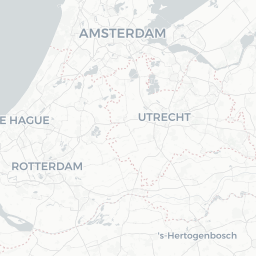
The city sits at the mouth of the Rhine-Meuse delta in South Holland, about 25 km south of The Hague and 75 km southwest of Amsterdam. Its waterfront — the Maas river runs through the centre — remains central to daily life, with working port infrastructure visible alongside promenades, floating pavilions, and converted warehouses that now house restaurants and creative studios.
Rotterdam has a reputation among Dutch cities for being direct and unpretentious, with a strong working-class heritage that coexists with a thriving creative and culinary culture. It is a genuinely diverse city: roughly half the population has a non-Dutch background, which is reflected in its neighbourhoods, markets, and food scene.
Before You Go
Visas
The Netherlands is a Schengen Area member. For visa requirements specific to your nationality, check TravelerPulse's Visas section and the official Dutch immigration authority (IND — Immigratie- en Naturalisatiedienst) at ind.nl.
Health
No specific vaccinations are required for travel to the Netherlands from most countries, but verify current requirements with your own health authority before departing. The European Health Insurance Card (EHIC) or its UK equivalent (GHIC) covers EU/UK citizens for necessary medical treatment. Travel insurance with medical cover is recommended for all visitors.
Money
The Euro is used throughout. ATMs are widely available. Contactless card payment is broadly accepted, including on public transport. Carrying a small amount of cash is still useful for markets and some smaller establishments.
Weather
Rotterdam has a maritime temperate climate. Summers (June–August) are mild to warm, typically 18–23 °C. Winters are cool and damp, with temperatures averaging around 4–8 °C. Rain can arrive at any time of year, so a waterproof layer is advisable regardless of season.
Getting There
By Air
The nearest major airport is Rotterdam The Hague Airport (RTM), located a few kilometres north of the city centre, with connections to a range of European destinations. Amsterdam Airport Schiphol (AMS), one of Europe's busiest hubs, is approximately 55–70 minutes away by direct train and offers far broader intercontinental connectivity. Verify current routes and transfer times on the relevant airline and NS (Dutch Railways) websites.
By Train
Rotterdam Centraal is a major railway hub. High-speed Thalys and Eurostar services connect Rotterdam directly to Brussels, Paris, and London (via Brussels). Domestic NS trains run frequently to Amsterdam, The Hague, Utrecht, and other Dutch cities. Rotterdam Centraal itself is a striking piece of architecture worth noting on arrival.
By Bus and Coach
Long-distance coach operators including FlixBus serve Rotterdam from various European cities. The main coach stop is near Rotterdam Centraal.
By Car
Rotterdam is well connected by motorway to the rest of the Netherlands and to Belgium and Germany. Note that parking in the city centre can be expensive and limited; public transport or park-and-ride facilities at the city edge are often more practical.
Getting Around
Rotterdam has an integrated public transport network operated by the RET, comprising metro lines, trams, buses, and a water taxi (Watertaxi Rotterdam). The metro is particularly useful for moving between the centre, the port areas, and outer neighbourhoods. Single-journey tickets and day passes can be loaded onto an OV-chipkaart (the national reloadable transit card) or purchased as disposable cards at machines. Check the RET website or the NS app for current fares and schedules.
Cycling is a natural way to explore the city. Rotterdam has an extensive cycling infrastructure, and hire bikes are available from several providers including the national OV-fiets scheme (available at Centraal station with an OV-chipkaart). The city is largely flat, making cycling accessible for most visitors.
Walking is practical for the city centre, with most major architectural landmarks, the Markthal, and the waterfront within a reasonable distance of each other. The Erasmusbrug (Erasmus Bridge) is a useful pedestrian and cyclist crossing between the northern and southern banks of the Maas.
Taxis and ride-hailing apps operate in Rotterdam. The water taxi is a functional — and scenic — way to cross the Maas or reach waterfront destinations not easily served by land transport.
Where to Stay
Rotterdam has accommodation options across a range of categories, from large international chain hotels near Centraal station and on the Wilhelminapier to smaller boutique and design hotels in converted industrial buildings. The city also has a growing supply of serviced apartments and short-term rentals.
For proximity to the main sights, the city centre and Wilhelminapier/Kop van Zuid areas offer the most convenient bases. The Witte de Withstraat and Oude Noorden neighbourhoods are good choices for travellers who prefer a more local, neighbourhood feel.
Book well in advance during major events such as the International Film Festival Rotterdam (January/February) and the North Sea Jazz Festival (July), when the city fills quickly. Verify rates and availability directly with hotels or through established booking platforms, as prices fluctuate considerably by season and event calendar.
Things to See & Do
Architecture and Landmarks
- Kubuswoningen (Cube Houses): Designed by Piet Blom in the 1970s–80s, these tilted yellow cube homes on Overblaak are one of Rotterdam's most photographed sights. One unit (the Kijk-Kubus show house) is typically open to visitors — verify opening times locally.
- Markthal: A vast horseshoe-shaped covered market and apartment building opened in 2014, with a spectacular interior ceiling mural. Houses food stalls, restaurants, and supermarket.
- Erasmusbrug: The cable-stayed bridge over the Maas, nicknamed 'The Swan', is a symbol of the modern city and worth crossing on foot or by bike.
- De Rotterdam: Rem Koolhaas/OMA's stacked vertical city tower on the Wilhelminapier is one of the largest buildings in the Netherlands.
- Depot Boijmans Van Beuningen: A striking mirrored bowl-shaped building housing the public-access art storage facility of the Boijmans museum. Verify current access arrangements as the main museum building remains under renovation.
Museums
- Museum Boijmans Van Beuningen: One of the Netherlands' most important art collections (Old Masters, modern and contemporary art). Main building under long-term renovation as of this writing; check official site for current access.
- Het Nieuwe Instituut: The Dutch national museum for architecture, design, and digital culture, located in the Museumpark.
- Maritiem Museum Rotterdam: Covers the city's maritime heritage, with historic vessels moored outside on the Leuvehaven.
- Kunsthal Rotterdam: A large exhibition space hosting rotating international exhibitions across art, design, and photography.
Waterfront and Neighbourhoods
- Wilhelminapier: The former departure point for ocean liners to the Americas, now transformed into a dense cluster of contemporary towers, hotels, and the Hotel New York (the former Holland America Line headquarters).
- Katendrecht: A former red-light district turned lively neighbourhood with independent restaurants, bars, and the Fenix Food Factory market hall.
- Delfshaven: One of the few areas to survive the 1940 bombing, with canal-side gabled houses and the Pilgrim Fathers Church (from which the Mayflower pilgrims are said to have departed in 1620).
- Witte de Withstraat: The city's main cultural and nightlife street, lined with galleries, cafés, and bars.
Food & Drink
Rotterdam's food scene reflects its diverse population and international port heritage. The city has developed a reputation as one of the better eating destinations in the Netherlands, with a concentration of quality restaurants across a range of cuisines and price points.
The Markthal is a good starting point for food exploration, with stalls covering Dutch, Surinamese, Turkish, Middle Eastern, and international produce and street food. The Fenix Food Factory in Katendrecht is a popular weekend food market in a converted warehouse. The Luchtsingel area and Witte de Withstraat have high concentrations of independent cafés and restaurants.
Dutch staples to try include herring (haring) from street stalls, stroopwafels, and Indonesian-influenced dishes (a legacy of colonial history) such as rijsttafel. Surinamese roti and Antillean food are also particularly well represented in Rotterdam relative to other Dutch cities.
Coffee culture is strong, with a number of specialty roasters and independent cafés in the centre and in neighbourhoods like Oude Noorden. Rotterdam also has a lively craft beer scene, with local breweries and taprooms scattered across the city. Verify individual restaurant opening days before visiting, as many close one or two days per week.
Shopping
Rotterdam's main retail street is the Lijnbaan, one of the first purpose-built pedestrian shopping streets in postwar Europe, lined with high-street chains. The adjacent Koopgoot (a below-street-level shopping passage) extends the retail offer.
For independent and design-focused shopping, the area around Witte de Withstraat and Nieuwe Binnenweg has bookshops, vintage clothing, design objects, and specialist stores. The Rotterdam Market on the Binnenrotte square operates on Tuesdays and Saturdays and is one of the largest outdoor markets in the Netherlands, selling food, clothing, and household goods.
The Markthal is worth visiting both for its architecture and for purchasing Dutch food products, cheese, and specialty items. Design objects and architecture books related to the city make distinctive souvenirs and are available at museum shops including Het Nieuwe Instituut.
Practical Information
Emergency Numbers
In the Netherlands, 112 is the single emergency number for police, fire, and ambulance. For non-emergency police matters, call 0900-8844. Verify these numbers are current before travel.
Electricity
The Netherlands uses Type C and Type F plugs at 230V/50Hz. Travellers from the UK, US, and other regions will need an adaptor.
Tipping
Tipping is not obligatory in the Netherlands but is appreciated for good service. Rounding up the bill or leaving 5–10% in restaurants is common practice. Tipping taxi drivers by rounding up is customary.
Accessibility
Rotterdam's modern infrastructure generally offers good accessibility for travellers with reduced mobility. Many metro stations have lifts, and trams increasingly have low-floor access. The uneven paving in older areas such as Delfshaven can present challenges. Verify accessibility details for specific attractions directly with venues.
Wi-Fi and Connectivity
Free Wi-Fi is available in most hotels, many cafés, and in some public areas. Dutch mobile networks provide good 4G/5G coverage across the city. EU roaming regulations allow EU/EEA residents to use their home mobile plan without additional roaming charges; visitors from outside the EU should check their provider's international rates or consider a local SIM.
Safety
Rotterdam is generally a safe city for travellers. As with any large urban area, normal precautions apply: be aware of your belongings in crowded areas such as Centraal station, markets, and busy nightlife streets, and avoid leaving valuables visible in parked vehicles.
Pickpocketing and bicycle theft are the most commonly reported crimes affecting visitors. Use secure bike locks if hiring a bicycle and lock to fixed infrastructure. The city centre, Wilhelminapier, and tourist neighbourhoods are well-lit and active in the evenings.
For the latest travel advice specific to your nationality, check your government's official foreign travel advisory service before departing.
Local Culture & Etiquette
Rotterdam has a distinct civic identity shaped by its destruction and reconstruction. Locals are often described as pragmatic and direct — a trait sometimes attributed to the city's working-port heritage — and there is a degree of civic pride in Rotterdam's difference from canal-heavy Amsterdam. Visitors should be aware that Dutch directness in communication is cultural, not unfriendly.
The city is notably multicultural, with large Surinamese, Turkish, Moroccan, Cape Verdean, and Antillean communities, among many others. This diversity is most visible in everyday life — in neighbourhoods, markets, and places of worship — and shapes the city's food culture and public character in ways that are genuine rather than touristic.
Religious and cultural events from multiple traditions take place throughout the year. Rotterdam hosts significant annual events including the International Film Festival Rotterdam (IFFR, January/February), the North Sea Jazz Festival (July, at Ahoy), and Rotterdam Pride (summer). Check official event websites for current dates and programme details, as these can shift year to year.