Overview
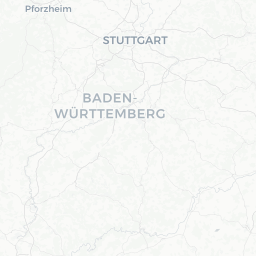
Basel sits at the point where Switzerland, Germany, and France converge — a geographical fact that shapes everything from its cuisine to its architecture. With roughly 178,000 residents, it is Switzerland's third-largest city and the capital of the half-canton of Basel-City. The Rhine curves through the centre, dividing the historic Grossbasel (Greater Basel) on the south bank from the more working-class Kleinbasel (Lesser Basel) on the north.
The city has been a significant European cultural hub since the 15th century, home to one of the oldest universities in Switzerland (founded 1460) and a long tradition of humanist scholarship — Erasmus of Rotterdam lived and worked here. Today Basel is as well known for its concentration of museums per capita as for being the home of pharmaceutical giants Novartis and Roche, whose campuses include remarkable contemporary architecture open to the public.
Despite its compact size, Basel punches well above its weight in the art world. It hosts Art Basel, one of the most important contemporary art fairs globally, each June. Year-round, the city maintains more than 40 museums, a serious classical music scene anchored by the Basel Symphony Orchestra, and a vibrant carnival (Fasnacht) that draws visitors from across Europe each spring.
Before You Go
Visas
Switzerland is not an EU member but participates in the Schengen Area. Visa requirements vary significantly depending on your nationality. Check TravelerPulse's Visas section for general guidance and consult the official Swiss State Secretariat for Migration (SEM) website for authoritative, up-to-date rules before booking.
Health
No vaccinations are specifically required for Switzerland. European Health Insurance Card (EHIC) holders from eligible countries should carry it, but travel insurance with medical coverage is strongly recommended for all visitors, as Swiss healthcare costs are high.
Money
Switzerland uses the Swiss Franc (CHF), not the Euro — though many businesses in Basel accept euros, often at unfavourable exchange rates. Credit cards are widely accepted, but it is worth carrying some cash for smaller establishments, markets, and trams. Tipping is not obligatory; rounding up a bill or leaving 5–10% for good service is appreciated.
What to Pack
- Comfortable walking shoes for cobblestone Old Town streets
- A light layer even in summer — evenings near the Rhine can be cool
- Swimwear if visiting June–August (Rhine swimming is a local institution)
- Plug adapter: Switzerland uses type J sockets (not interchangeable with standard EU type C without an adapter, though many devices work with a slim adapter)
Getting There
By Air
EuroAirport Basel-Mulhouse-Freiburg (BSL/MLH) is a unique binational airport straddling the Swiss-French border, located roughly 9 km northwest of the city centre. It serves a wide range of European and some long-haul destinations. Two separate terminal zones — Swiss and French — operate under different customs regimes. Shuttle buses and taxis connect the airport to Basel city centre; verify current schedules and fares on the airport's official website or locally.
By Rail
Basel has two main railway stations. Basel SBB (Schweizerischer Bundesbahnen) is the primary station and one of Switzerland's busiest, with direct connections to Zurich, Bern, Geneva, Paris (TGV), Frankfurt, Amsterdam, and other major European cities. Basel Badischer Bahnhof (Basel Bad Bf), on the Kleinbasel side, is technically German territory and handles trains toward Freiburg im Breisgau and other German destinations. The Swiss rail network (SBB) is punctual and extensive; check sbb.ch for timetables.
By Road
Basel lies at the intersection of major Swiss, French, and German motorways. Driving into Switzerland requires a motorway vignette (annual sticker) for use of Swiss highways — available at border crossings, petrol stations, and post offices. Verify current requirements and prices before travel. Parking in central Basel is limited and expensive; rail or public transport is generally preferable.
Getting Around
Basel has one of the most efficient urban public transport networks in Switzerland, operated by BVB (Basler Verkehrs-Betriebe) and BLT. Trams are the backbone of the system and reach virtually every neighbourhood of interest to visitors. A small number of bus lines supplement the tram network.
Most hotels provide guests with a complimentary Basel Card, which covers unlimited public transport within the city, discounted or free museum entry, and other benefits — confirm this with your accommodation when booking. Day passes and multi-day tickets are also available; verify current fares and zones at ticket machines or the BVB website.
Cycling is popular and well-supported. The city has an extensive network of bike lanes, and rental bikes are available at several locations — check locally for current providers and pricing. The Rhine ferries (Fähren) — four small cable-driven ferries that cross between Grossbasel and Kleinbasel — are both a practical transport option and a local experience worth trying; a nominal fare applies.
The compact Old Town is best explored on foot. Many central sights are within easy walking distance of one another, and pedestrian zones make strolling comfortable.
Things to See & Do
Museums and Galleries
Basel's museum density is exceptional. The Kunstmuseum Basel is the oldest public art museum in the world (its core collection dates to 1661) and houses an outstanding collection spanning Old Masters to contemporary art across several buildings. The Fondation Beyeler in the suburb of Riehen is widely considered one of the finest private art museums in Europe, with works by Picasso, Monet, Giacometti, and Warhol in a building designed by Renzo Piano — verify opening hours and admission fees on their official site. The Museum Tinguely celebrates the kinetic sculptures of Jean Tinguely in a waterfront building. The Vitra Campus just across the border in Weil am Rhein, Germany, is a pilgrimage site for architecture and design enthusiasts, with buildings by Zaha Hadid, Frank Gehry, and others — note it requires a short tram and walk or bus from Basel.
Novartis and Roche Campuses
Both pharmaceutical companies have opened portions of their headquarters campuses to the public, featuring buildings by architects including Frank Gehry, David Chipperfield, and Herzog & de Meuron. Access arrangements and tour availability vary — check each company's visitor information before going.
Old Town (Altstadt)
The medieval Old Town on Grossbasel's hillside rewards unhurried exploration. Key landmarks include Basel Minster (Basler Münster), a red sandstone cathedral with Romanesque and Gothic elements and a terrace offering wide Rhine views; the colourfully painted Town Hall (Rathaus); and the Marktplatz, the heart of civic life. The university quarter nearby is lively and dotted with bookshops and cafés.
Rhine Swimming
From roughly June through August, locals swim in the Rhine — drifting downstream in the current and emerging at a downstream point. Designated bathing areas (Rheinbad) provide changing facilities and lifeguards. This is a genuine Basel tradition; follow local safety guidance on currents and water quality before entering.
Fasnacht Carnival
Basel Fasnacht, held in the week after Ash Wednesday (dates vary each year), is one of the most distinctive carnivals in Europe and listed on the UNESCO Intangible Cultural Heritage list. It begins at 4 am on Monday with the 'Morgestraich' — a city-wide extinguishing of lights followed by masked lantern-lit processions. Unlike many carnivals, it is largely a local affair, with participation by organised 'Cliques' who have rehearsed for months. Accommodation books out far in advance.
Food & Drink
Basel's food scene reflects its position at the junction of three countries. German, French, and Swiss-German influences are all present, and the city has restaurants at every price point — though costs in Switzerland are generally high by European standards.
Local Specialities
- Läckerli: Basel's signature spiced honey biscuit, sold in tins across the city — Läckerli-Huus is the most famous producer
- Zwiebelwähe: a savoury onion tart common across the region
- Flour soup (Mehlsuppe): traditionally served during Fasnacht, a roasted flour broth
- Rhine fish: freshwater fish dishes appear on traditional menus, though supply varies
- Basler Brot: a local rye and wheat bread variety
Neighbourhoods for Eating and Drinking
The Steinenvorstadt and surrounding streets are dense with restaurants and bars catering to a younger crowd. The Marktplatz and surrounding Altstadt have a mix of traditional restaurants and café terraces. Kleinbasel, the north bank neighbourhood, has grown into a more eclectic, independent dining and nightlife scene. The Rhine promenade is lined with casual outdoor spots in summer.
Coffee culture is strong, with numerous independent cafés alongside international chains. Basel also has a growing number of wine bars — the wine-producing regions of Alsace (France) and Baden (Germany) are just across the borders.
Shopping
Basel's main shopping street is Freie Strasse, a pedestrian zone lined with international chains and Swiss retailers. Marktplatz hosts a daily fresh produce market where local growers sell fruit, vegetables, and flowers — worth visiting in the morning. Specialty food shops around the Old Town carry local products including Läckerli biscuits, Swiss chocolate, and regional wines from across the border.
For design and independent retail, Kleinbasel and the streets around the university have a denser concentration of independent boutiques, vintage shops, and record stores. The city's museum shops — particularly at the Kunstmuseum and Fondation Beyeler — are well-regarded for art books and design objects.
Note that Swiss shopping hours can be more restricted than in some other European cities; many shops close on Sunday and may close earlier on Saturday. Verify hours locally, particularly on public holidays.
Practical Information
Emergency Numbers
- General emergency (ambulance, fire, police): 112 (EU-wide standard, works in Switzerland)
- Police: 117
- Ambulance / Medical emergency: 144
- Fire: 118
Electricity
Switzerland uses 230V / 50Hz with type J three-pin sockets. Most European two-pin plugs fit with a simple adapter; travellers from North America, the UK, and other regions will need an appropriate adapter and possibly a voltage converter for older devices.
Internet and Connectivity
Free Wi-Fi is available in many hotels, cafés, and public spaces. Switzerland is not in the EU, so EU roaming regulations do not apply — travellers with EU SIM cards may incur roaming charges. Check with your carrier before travel.
Pharmacies
Pharmacies (Apotheke) are found throughout the city and stock a wide range of over-the-counter medications. Pharmacists are generally well-trained and can advise on minor ailments. For prescription medications, bring sufficient supply from home along with documentation.
Accessibility
Basel's tram network is largely accessible, with low-floor vehicles on most lines. The Old Town's cobblestone streets can be challenging for wheelchairs and pushchairs. The main museums have generally made significant accessibility improvements — verify specific facilities with each venue before visiting.
Safety
Basel is a very safe city by most international standards. Violent crime is rare, and the city centre and main tourist areas are generally comfortable to walk at night. Standard urban precautions apply: be aware of your belongings in crowded places such as the Marktplatz, tram stops, and during major events like Art Basel or Fasnacht when the city is at its busiest.
The Rhine swimming culture is popular but carries real risks. Currents can be stronger than they appear, and the river is cold even in summer. Always follow posted safety advice, use designated swimming areas with lifeguard supervision, and consider using a 'Wickelfisch' (a waterproof dry bag used as a float by locals) if swimming downstream. Children should be closely supervised near the riverbanks.
Healthcare facilities in Basel are excellent. The University Hospital Basel (Universitätsspital Basel) is a major teaching hospital with broad specialist capability. As noted, costs are high without adequate insurance.
Local Culture & Etiquette
Basel has a distinct local identity shaped by centuries as a trading and intellectual crossroads. Residents speak Baseldeutsch, a variety of Alemannic Swiss German that differs notably from standard German and from the dialects of other Swiss cities — though standard German, French, and English are all commonly understood.
The city has an unusually strong sense of civic investment in culture. The Kunstmuseum's founding collection was purchased by the citizens of Basel in 1661 — reportedly to prevent it from leaving the city — establishing a tradition of public engagement with the arts that persists today. Local institutions such as the Basel Symphony Orchestra and Theater Basel maintain ambitious programming year-round.
Fasnacht is perhaps the clearest expression of Basler identity: it is organised by locals, for locals, and participation in the processions and masked Cliques requires membership in established groups. Visitors are welcome to watch but are observers of a living civic ritual rather than participants. The carnival's deliberately anti-establishment spirit — and its unusual timing, starting after rather than before Lent, a historical act of Protestant defiance — says something about the city's independent character.
Respect for quietude (Ruhe) is important in Swiss urban life. Noise in residential buildings late at night, especially after 10 pm, is genuinely unwelcome. Sunday is still treated as a day of rest by many residents, and this is reflected in reduced shopping hours and quieter streets in some neighbourhoods.