Overview
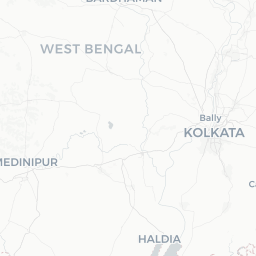
Kolkata — formerly Calcutta — sits on the eastern bank of the Hooghly River in West Bengal and serves as the cultural, intellectual, and commercial heart of eastern India. With a population of roughly 4.6 million in the city proper (and a significantly larger metropolitan area), it is one of India's major urban centres.
The city was the seat of British India until 1911, and that history is legible in its streets: grand colonial-era buildings, the maidan, and the Victoria Memorial coexist with densely packed neighbourhoods of remarkable vitality. Kolkata is closely associated with the Bengal Renaissance — a 19th-century flowering of literature, philosophy, and social reform — and remains a city where bookshops, poetry recitals, and intellectual debate are taken seriously.
Kolkata's identity is also shaped by its people. Bengalis celebrate life loudly through festivals, food, football, and art. The city's relationship with Durga Puja is unlike anything else in India: for four days each autumn, the entire metropolis transforms into an open-air art installation, with elaborately themed neighbourhood pandals (temporary shrines) drawing millions of visitors. UNESCO recognised the festival's cultural significance in 2021 by adding it to its Intangible Cultural Heritage list.
For travellers willing to slow down and engage, Kolkata rewards curiosity. It is not a city of polished surfaces, but of texture, warmth, and depth.
Before You Go
Visas
Most international visitors require a visa to enter India. Visa rules, eligibility for e-visa schemes, and processing times change regularly. Check TravelerPulse's Visas section for general guidance and verify your specific requirements directly with the Indian Bureau of Immigration (indianvisaonline.gov.in) or your nearest Indian embassy or consulate well before travel.
Health
Consult a travel medicine clinic at least four to six weeks before departure. Hepatitis A, typhoid, and routine vaccinations are generally recommended for India travel; your doctor may advise additional precautions depending on your itinerary and health history. Tap water is not safe to drink — use sealed bottled water or a reliable filter. Mosquito-borne illnesses (dengue, malaria) are present; use repellent and wear long sleeves at dusk.
Weather and what to pack
Kolkata has a tropical wet-and-dry climate. Summers (April–June) are intensely hot and humid, with temperatures regularly exceeding 38 °C. The monsoon (July–September) brings heavy rainfall and occasional flooding. October to March is the most comfortable window. Light, breathable clothing suits most of the year; carry a light layer for air-conditioned spaces. Modest dress is advisable when visiting religious sites — shoulders and knees covered.
Connectivity
SIM cards from major Indian operators (Airtel, Jio, Vi) are available at the airport and in the city; foreign visitors typically need to show a passport and a local address to register. Wi-Fi is available in most hotels and many cafés.
Getting There
By Air
Netaji Subhas Chandra Bose International Airport (IATA: CCU) handles domestic and international flights. It sits approximately 15–17 km north of the city centre. Confirm current transfer options — including prepaid taxis, app-based cabs, and the Airport Metro line — on arrival, as services and routes evolve.
By Train
Kolkata is a major rail hub with several large terminus stations, the most important being Howrah Junction (across the Hooghly River) and Sealdah Station. Both are well connected to destinations across India. Book through the Indian Railways official reservation portal (irctc.co.in) in advance, especially for popular long-distance routes.
By Road
Long-distance buses connect Kolkata to cities in West Bengal and neighbouring states. Road travel into the city from the airport or suburbs can be slow due to traffic; factor in extra time, particularly during morning and evening peak hours.
By Water
Historically significant but now limited for tourists: small ferries (known locally as launches) cross the Hooghly between Kolkata and Howrah and are used mainly by commuters. They offer a memorable, inexpensive river perspective.
Getting Around
Metro
Kolkata's Metro Rail is India's oldest operational rapid transit system, dating to 1984. It continues to expand with new lines and corridors. It is clean, affordable, and efficient for navigating key parts of the city. Verify current line maps and hours at the Kolkata Metro Rail Corporation (mtp.indianrailways.gov.in) or verify locally.
Trams
Kolkata operates one of the last tram networks in India, running on a small number of routes through central neighbourhoods. Trams are slow but provide a distinctive, atmospheric way to see parts of the city at street level.
Auto-rickshaws and cycle-rickshaws
Three-wheeled auto-rickshaws cover many local routes; cycle-rickshaws remain common in older residential neighbourhoods. Negotiate the fare before boarding where meters are absent.
App-based cabs and taxis
Ola and Uber operate in Kolkata and are generally convenient for point-to-point travel. Yellow Ambassador taxis (increasingly rare) are iconic but less common than they once were.
On foot
Central areas — Esplanade, Park Street, College Street, the Maidan — are walkable, though pavements can be uneven and pedestrian traffic dense. Walking is often the best way to absorb neighbourhood life.
Things to See & Do
Heritage and History
- Victoria Memorial — A large white marble building completed in 1921, now a museum charting Bengal and British India history. One of the most visited landmarks in the city. Verify current opening hours and entry fees directly with the monument.
- Howrah Bridge (Rabindra Setu) — The iconic cantilever bridge over the Hooghly; pedestrian access is possible and views from the bank are excellent, particularly at dawn.
- St. Paul's Cathedral — A 19th-century Anglican cathedral near the Maidan, open to visitors.
- Indian Museum — One of the oldest and largest museums in Asia, located on Chowringhee Road, with collections spanning art, archaeology, and natural history. Verify hours and fees locally.
- Marble Palace — A 19th-century mansion in North Kolkata housing a private art and sculpture collection. Entry generally requires advance arrangement; verify locally.
Neighbourhoods worth exploring
- North Kolkata (Shyambazar, Jorasanko, Kumartuli) — The oldest part of the city, with crumbling mansions, the Tagore family's ancestral home (Jorasanko Thakur Bari, now a museum), and the potters' quarter where Durga Puja idols are sculpted year-round.
- College Street — The heart of Kolkata's book trade, with hundreds of stalls selling new and secondhand books in Bengali and English. The famous Indian Coffee House is here.
- Park Street — A wide commercial boulevard with restaurants, shops, and a lively after-dark scene; the South Park Street Cemetery contains graves of many colonial-era figures.
Cultural Experiences
- Attending a Durga Puja pandal during the festival (Oct–Nov) is transformative and free.
- Rabindra Sadan and Nandan cultural complexes host theatre, dance, and film — check local listings on arrival.
- Sundarbans day trips (see Nearby section) are bookable from the city.
The Hooghly River
Ferry rides across the river between Howrah and Babu Ghat or Prinsep Ghat cost very little and offer a ground-level view of the city's riverside industrial and spiritual life.
Food & Drink
Kolkata's food culture is a serious matter for residents, and the city offers remarkable depth across price points.
Bengali cuisine
The city's home cooking tradition — mustard-infused fish curries, slow-cooked mutton, lightly spiced vegetables, and rice — is available at neighbourhood eateries and upscale restaurants. Look for dishes like machher jhol (fish curry), kosha mangsho (dry-cooked mutton), and shorshe ilish (hilsa fish in mustard sauce). Hilsa (ilish) is treated with near-reverence in Bengal; its seasonal availability is a topic of genuine civic conversation.
Street food
Kolkata street food has a distinct character: kati rolls (egg or meat rolled in paratha bread, reportedly originating here), puchka (the local version of pani puri, with tamarind water), ghugni (spiced yellow peas), jhalmuri (puffed rice with spices and vegetables), and aloo kabli. The street-food corridors around Esplanade and New Market are good starting points. Exercise the usual caution about stalls and hygiene.
Sweets
Bengali mishti (sweets) are distinct from other Indian confections — typically less oily, more delicate, and dairy-based. Rasgolla, sandesh, mishti doi (sweetened yoghurt), and chomchom are widely available from traditional sweet shops (mishti dokan). Several old-established sweet shops operate in the city; locals will have strong opinions about which is best.
Cafés and casual dining
Indian Coffee House on College Street is an institution — a large, colonial-style café where students, writers, and artists have congregated for decades. Park Street has a concentration of restaurants ranging from casual to formal.
Shopping
Textiles and handicrafts
West Bengal is known for Kantha embroidery, Tant (handloom cotton), Muslin, and silk weaving. Government-run craft emporiums (look for Biswa Bangla stores, which stock certified artisan products) are reliable for quality and pricing transparency. Haggling is expected in markets but not in fixed-price emporia.
New Market (Sir Stuart Hogg Market)
A large, historic covered market in central Kolkata with stalls selling clothing, accessories, leather goods, food, and more. Prices are negotiable; compare before buying.
College Street and book shopping
For books — academic, literary, Bengali-language, and secondhand English titles — College Street is unrivalled within the city. Publishers' offices and small presses also operate in this area.
Kumartuli
The potters' quarter is not a conventional shopping destination, but artisans here sell smaller clay figures and craft items alongside the large Durga Puja idols. Worth visiting for the craft process itself.
Practical Information
Emergency contacts
Verify current local emergency numbers on arrival. In India, the general emergency number is 112. For police specifically, 100 is the traditional number; for ambulance, 108 in West Bengal. Confirm these are current at your accommodation.
Hospitals
Kolkata has several large public and private hospitals. Your hotel or accommodation can direct you to the nearest reputable facility. If you have travel insurance — which is strongly recommended — keep your insurer's emergency contact number accessible.
Money
ATMs (operated by major Indian banks and international networks) are widely available. Cash remains important in markets and smaller eateries; cards are accepted at hotels, larger restaurants, and modern retail. Inform your home bank before departure to avoid card blocks.
Power
India uses 230V/50Hz. Plug types include the round-pin Type C and Type D configurations. Carry a universal adaptor. Power cuts can occur; a small power bank for devices is useful.
Tipping
Not obligatory but appreciated. A small amount at restaurants where service charge is not included, and for hotel staff and guides, is customary. Amounts are at your discretion.
Photography
Kolkata is a visually rich city. Always ask before photographing individuals, particularly in sensitive contexts (poverty, religious ceremonies). Some monuments and museums prohibit photography inside, or charge a camera fee — check signage on arrival.
Safety
Kolkata has a reputation, broadly borne out, as one of India's safer major cities for travellers. That said, standard urban precautions apply everywhere.
Petty theft (pickpocketing, bag-snatching) can occur in crowded areas — railway stations, markets, and festival gatherings. Keep valuables secure and avoid displaying expensive jewellery or electronics unnecessarily. Use registered taxis or app-based cabs rather than accepting unsolicited ride offers.
Traffic is chaotic by Western standards — cross roads with care and follow local cues. Pavements are often occupied by vendors, parked vehicles, or in poor repair, requiring constant attention underfoot.
For solo women travellers: street harassment (staring, unsolicited comment) can occur, particularly in less-touristed areas. Dressing modestly reduces, though does not eliminate, unwanted attention. Keeping accommodation contact details readily accessible and using trusted transport options at night is advisable. Many women travel Kolkata independently without incident.
Check your government's current travel advisory for India before departure, as conditions can change.
Local Culture & Etiquette
Kolkata holds an unusual place in Indian cultural life — it is a city that takes art, literature, politics, and intellectual debate as civic activities, not niche pursuits. The Bengal Renaissance of the 19th century, associated with figures including Rabindranath Tagore (Nobel Prize in Literature, 1913) and Raja Ram Mohan Roy, casts a long shadow over how the city understands itself.
Religion is pluralistic and visible. Hindu temples, mosques, churches, Jain temples, and synagogues (including two functioning historic synagogues) coexist across the urban fabric. Durga Puja is the year's dominant cultural event — more civic festival than purely religious one — and participation cuts across community lines. Eid, Christmas, Kali Puja, and Saraswati Puja are also widely celebrated.
The city has a strong football culture, with the Mohun Bagan and East Bengal clubs commanding fierce loyalties and a rivalry that dates back over a century. Match days at the Salt Lake Stadium carry their own cultural atmosphere.
When visiting religious sites: remove shoes where indicated (usually at the entrance), dress modestly, avoid entering sanctuaries during active prayers unless invited, and handle offerings with respect. Leather items (belts, bags) are sometimes asked to be left outside Hindu temples. Follow posted guidelines and local cues.